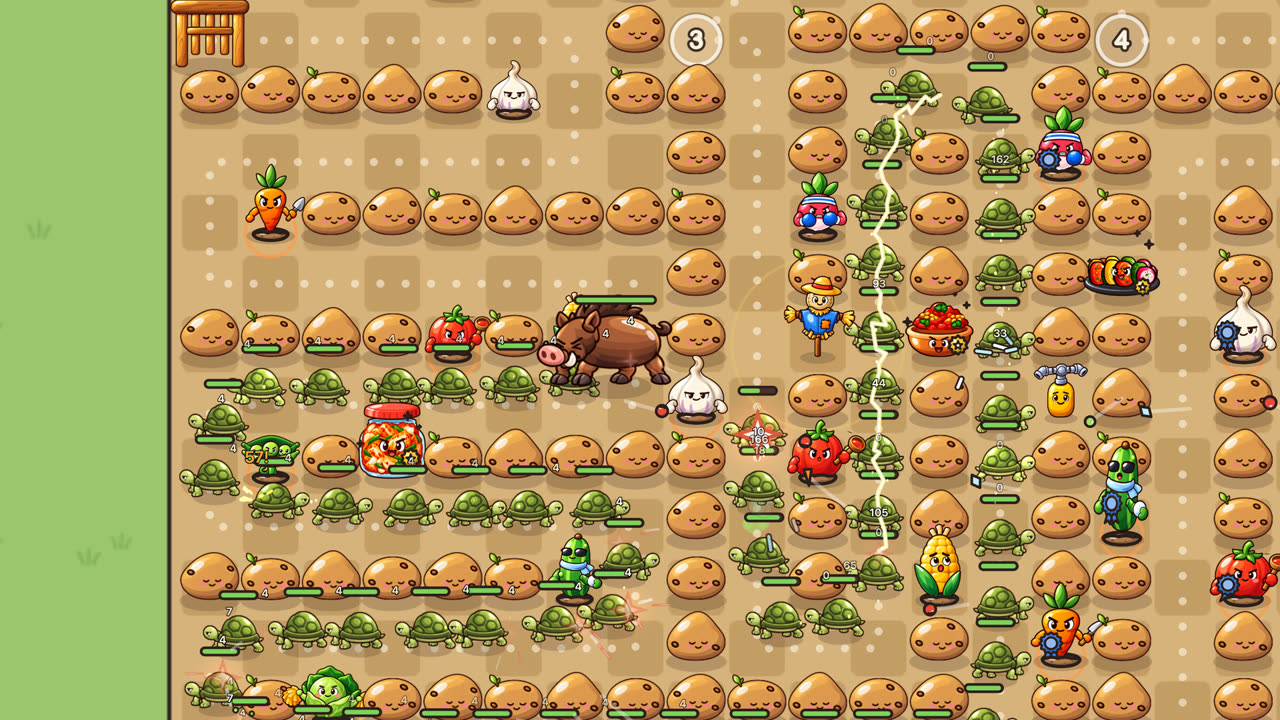
Maze tower defense · PC
Harvest TD
Plant five seeds a round, keep one as a tower, wall the pests in with potatoes. Fifty waves, cooking, co-op.
Vibe Engine is the game engine made to be driven by AI agents. Say what you want and get a real, playable game for PC, mobile or the web. Any genre, 2D or 3D, solo or online.
Every game in this reel was built by AI agents in Vibe Engine. The agents also played those games, staged the scenes and rendered the footage. Nobody sat at a screen recorder.
No API keys, no paid AI services, no extra tools or libraries to install. Music, sound, 3D models, textures and effects are all made inside the engine, by the agent you already use.
Works with Claude Code, Codex, Cursor and Gemini CLI.
The engine is self-contained, and opens up to any API when a project calls for more. The agent can wire in whatever service you already use: ElevenLabs for voices, Tripo for 3D models, an image or music generator, your own backend, and anything else with an API.
A one-line pitch, a design doc, reference games, sketches. Whatever you have works. No idea yet? A short questionnaire gets you started.
An AI agent turns it into a playable game, with effects, animation and sound already in. You get something to play from the first build.
Open it in a browser and play. Change what you want in plain words, or drag sliders while it runs until it feels right.
The same game goes out to the web, PC, mobile and ad networks. No rewrite per platform.
So the fastest way to a good game is to get something playable, then keep playing it while it changes.
Describing a game takes about as long as building a playable version of it. So build it, play it the same day, and know whether the idea is fun before anyone writes a plan.
Screen shake, hit pauses, particles, animation, sound. The rules the agents follow were written by game teams while shipping their own games, so good practice is in from the first build.
No editor, no heavy download, no build to sit through. The game runs in a browser tab and every change is on screen the moment it is made.
One key saves a report with the game state and a screenshot. Hand it to the agent and it reproduces the bug, fixes it, then plays the game itself to check the fix.
A single file that runs in any browser. Share a link, or send the file itself.
A Windows app, ready for Steam.
Store builds with the SDKs a publisher asks for: AdMob, Meta, analytics, attribution and the rest.
The game itself, cut down to a playable ad for the major ad networks.
Footage rendered straight from the game, at any size, for stores, socials and ad creatives.
An engine written for agents to read and drive, in TypeScript, with no runtime dependencies. Here is what they work with.
Games are written against one documented API that the agent reads. Type errors surface before anyone plays.
The running game reloads in place on every change. Live sliders tune values without a restart.
Fixed step, seeded randomness, bit-stable maths. The same inputs give the same game, every time, on every machine.
Agents run the game without a screen to test scenarios, balance numbers and catch regressions, faster than real time.
Canvas or WebGL behind one interface. Cutout rigs, particles, destructible blocks, hit stop, slow motion, zoom punches.
Three.js on WebGPU with a WebGL2 fallback. Procedural humanoids and creatures, ragdolls, terrain, water, baked lighting, custom shaders.
Jolt for 3D and Rapier for 2D, stepped on the same fixed clock as the rest of the game.
Lockstep with rooms, a lobby and a room browser. Peer-to-peer routes with relay fallback, bots, desync checks, proximity voice.
Synth effects, a recorded effects library sorted by action and material, sampled instruments, music composed in code.
A seeded run renders to an exact video at any size. Trailers and creatives come out frame-perfect and repeatable.
Ads, analytics and attribution SDKs plug in through the native layer. If it exists for Android or Unity, it can be ported.
A level editor in the page, save slots, languages, settings menus, splash and loading screens.
Plant five seeds a round, keep one as a tower, wall the pests in with potatoes. Fifty waves, cooking, co-op.
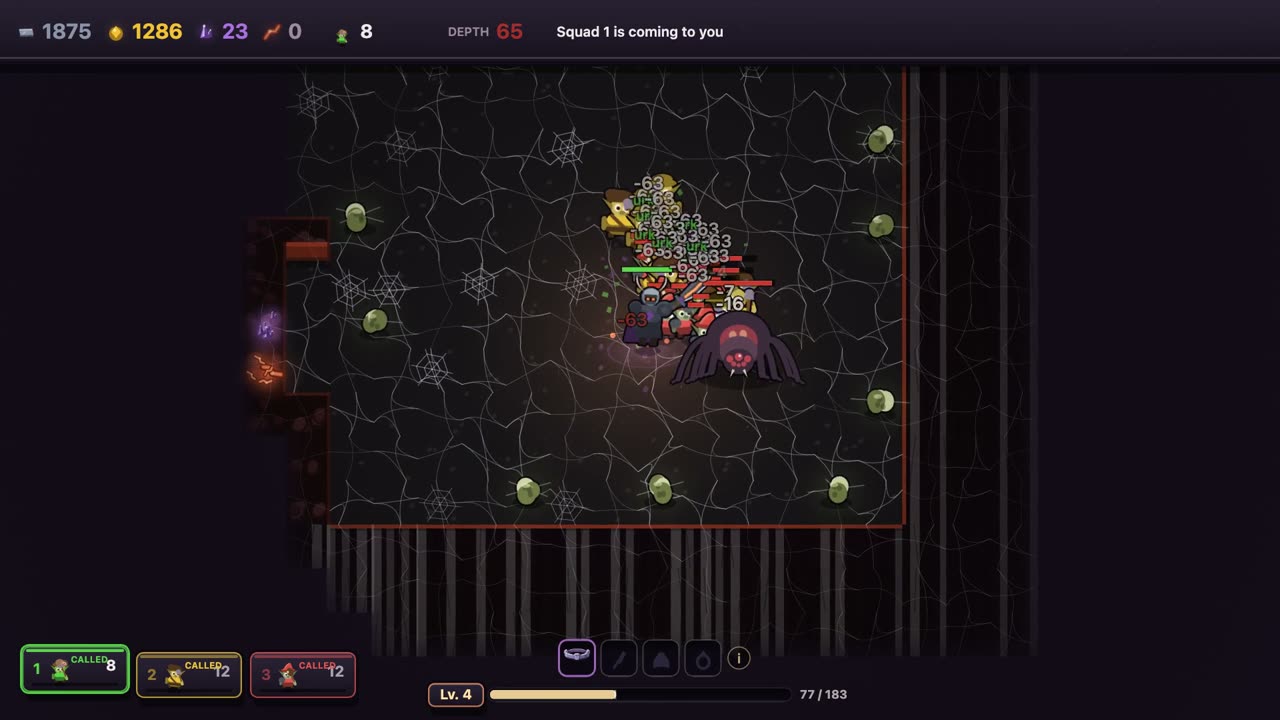
You are the goblin overlord. Draw on the rock and the swarm digs, builds, loots and fights for you.
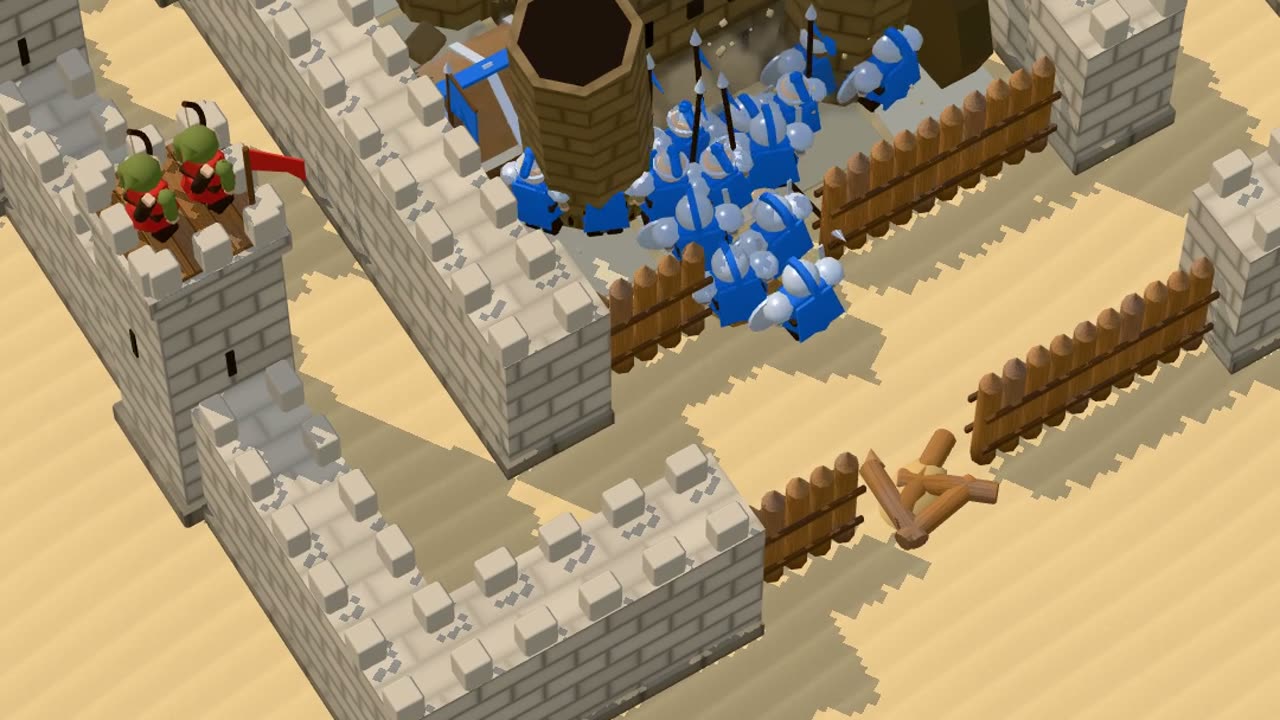
Build your castle, draft an army, find the weak spot in theirs. Walls break where the stones are hit.
Vibe Engine is not publicly released. Tell us who you are and what you would make, and we will get back to you.